I help mid-size companies and growing startups with supply chain and manufacturing operations design their processes, governance, and ways of working. My work turns friction between teams into real alignment, so the right decisions happen at the right level, at the right time. From process mapping to governance design to cross-functional workshops, I build what your team will actually use.
I work at the intersection of process design, organizational design, change management, and capability building. My approach starts in the details, mapping how work actually moves through your organization rather than how it's supposed to move on paper. From there, I build the governance structures, the workflows, and the conversations that let your team operate with less friction and more clarity. The goal isn't a deck that sits in a folder. It's a way of working that holds up long after I'm gone.
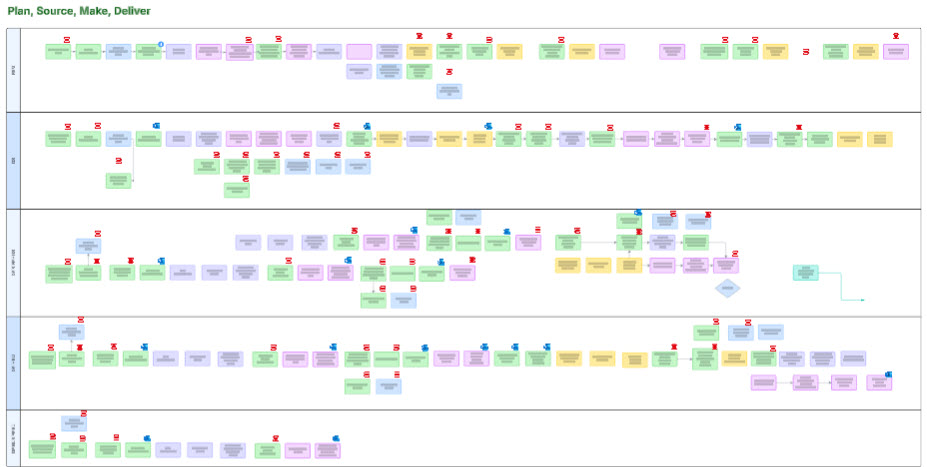
I run intensive sessions that map process steps from start to finish, surfacing gaps, handoffs, and inefficiencies in a way that builds trust and understanding within the team.
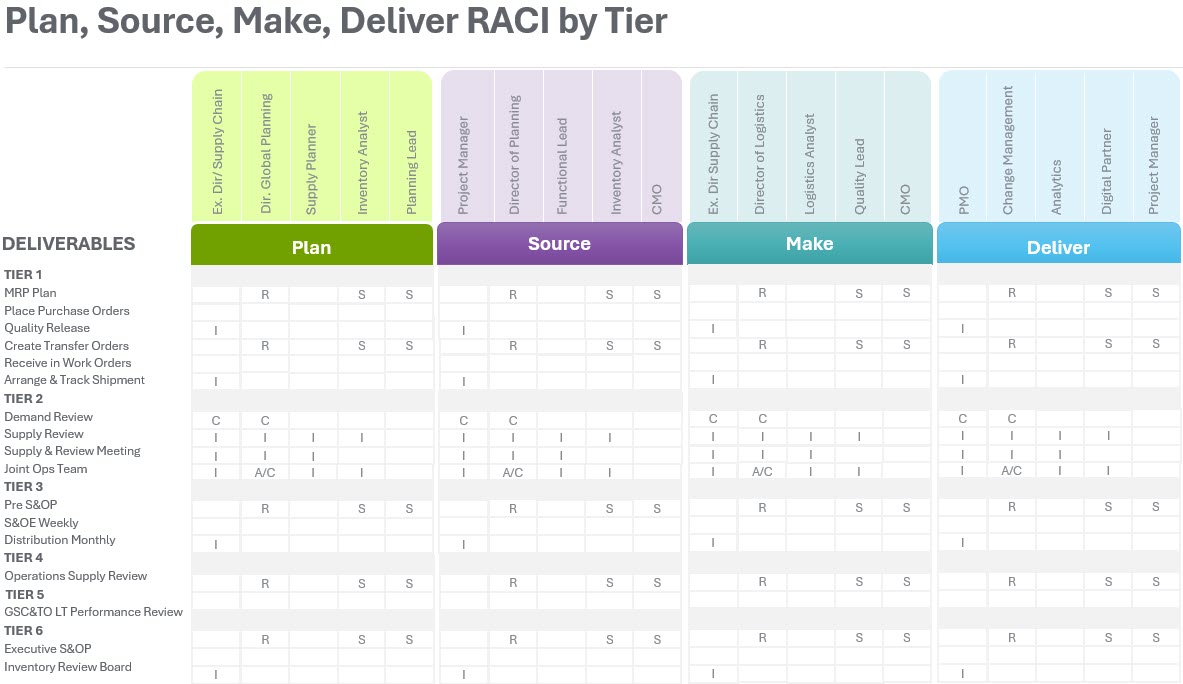
I design governance frameworks that get the right information to the right people at the right level, so teams can make faster, better decisions without sitting through unnecessary meetings.
I facilitate workshops that build shared understanding and clear ownership, turning recurring friction between teams into a process that actually works.
A career built inside supply chain, and a realization about where I actually belong in it.
I have always loved supply chain. It's a deeply numbers-driven field where there's always something to optimize, whether it's a forecast to tighten, a process to streamline, or a system to integrate. That part of the work still excites me.
But somewhere along the way, I noticed where I actually thrive most. It isn't in improving an already-established process. It's in creating the process. Establishing the governance. Bringing people into a room and working through ideas until something real takes shape.
My sweet spot is eliminating friction by having the right conversation, with the right people, at the right time.
I love bringing people to consensus and helping them realize they're not as far apart as they thought. I love figuring out what belongs in which meeting, and with whom. I love helping teams find their story, and designing the kind of town hall that people remember months later.
At the core of all of it is one skill: knowing what question to ask, and when.
It's a skill I practice outside of work too, as the founder of DeepTalkTO, a monthly dinner series where six people gather to practice the art of meaningful conversation. I facilitate those evenings the same way I facilitate a workshop, by creating the conditions for honesty.

Three engagements across biopharmaceutical clients, each one started with a room full of friction and ended with a team that knew how to move.
Commercial and supply chain teams operated in silos. There was no shared forum for demand alignment and no S&OP process in place, and each team was fluent in their own metrics but disconnected from the other's reality.
Facilitated a cross-functional workshop and established the company's first Demand Review meeting as a structured, recurring part of the S&OP cycle.
Recurring tension between clinical trials and clinical supply chain around ownership and accountability, with neither team having full visibility into the other's reality.
An end-to-end process mapping session from study protocol to study close, with both teams in the room together, making invisible gaps visible in real time.
Post-launch role ambiguity, territorial friction over commercialization handoffs, and Phase I/II development gaps that had created Phase III bottlenecks.
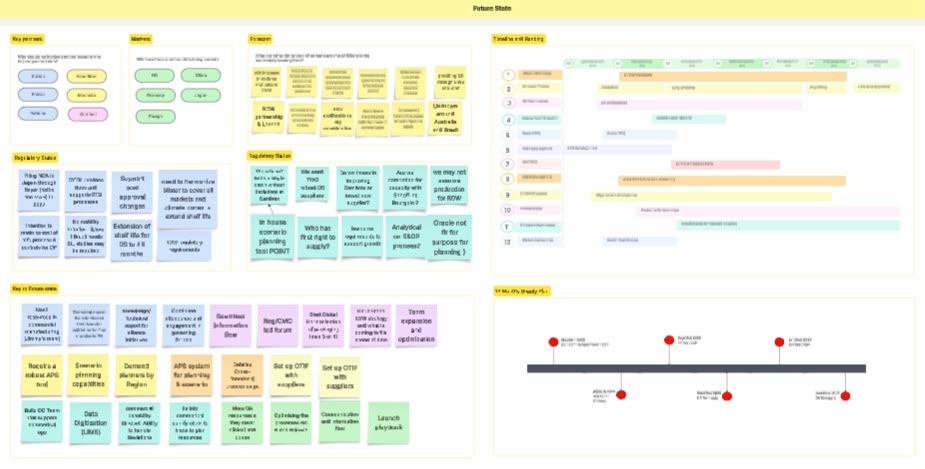
2-day workshop using strengths-based facilitation, retrospective analysis, and iterative framework development to enable honest dialogue without defensiveness.
Three principles that run through every engagement, and why the frameworks last after I leave.
Terminology and structure land as the client's own, not consultant-imported. Adoption happens because people recognize themselves in the work.
People can't solve problems they haven't admitted exist. My sessions are designed to surface the truth without making anyone the villain.
Every framework I build is designed for adoption, not just documentation. Change sticks when it's built with the team, not handed to them.
Let's start with a 30-minute discovery call. You'll leave with clarity on where you're stuck and what it would take to fix it.
Book a discovery call